Tag: ChatGPT
-
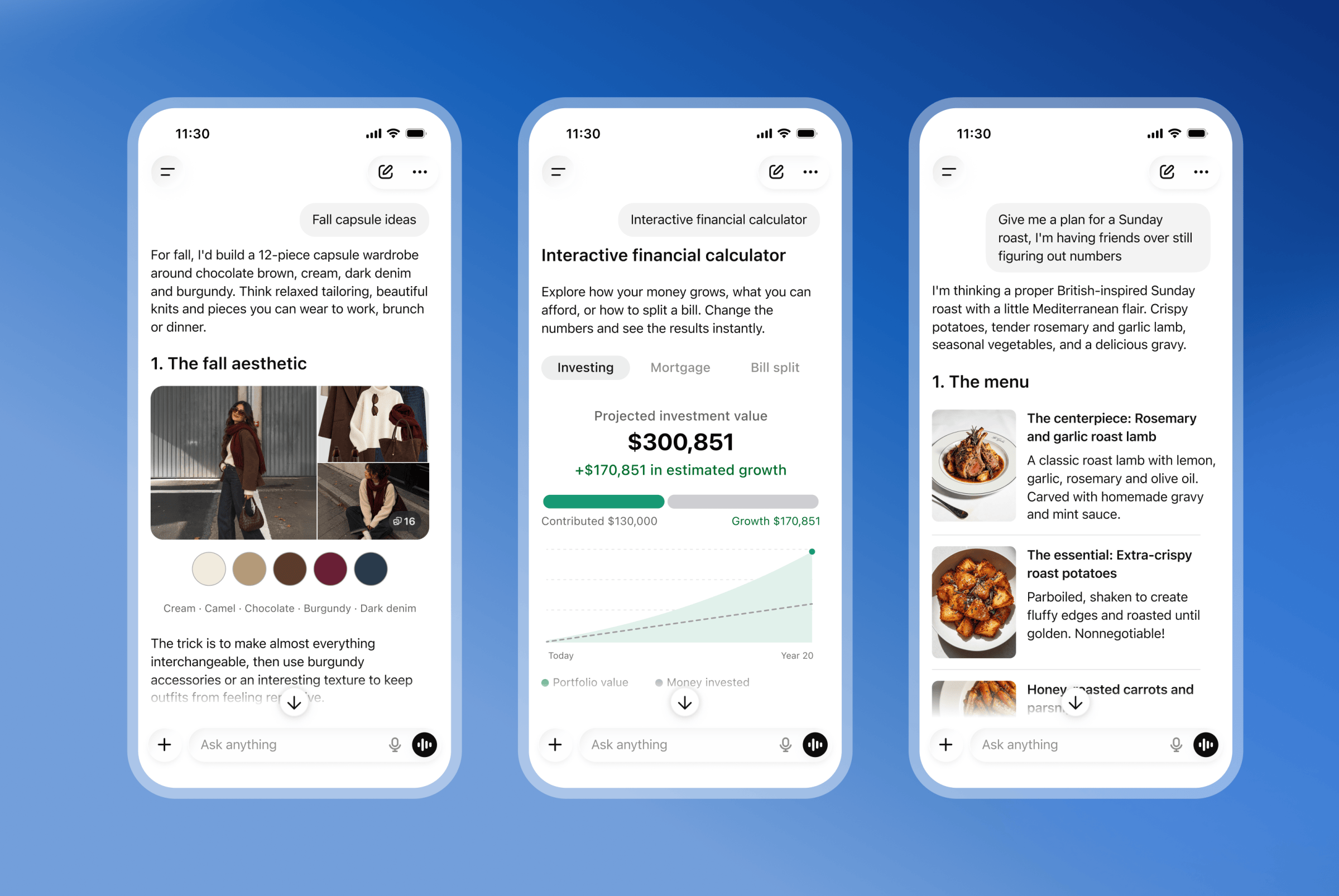
OpenAI Brings GPT-6 and Intelligent UI to ChatGPT
OpenAI began rolling out GPT-6 in ChatGPT on October 7, 2026, together with a new capability called Intelligent UI that lets the chatbot answer with interactive interfaces — charts, buttons, forms, and small working tools — instead of text alone. The update reaches ChatGPT’s Chat tab globally: Plus, Pro, Business, and Enterprise subscribers received GPT-6 […]
-
OpenAI Launches Dots, Always-On Agents Powered by GPT-6 Astra
OpenAI launched dots at DevDay on September 29, 2026: always-on personal agents, powered by GPT‑6 Astra, that run on their own cloud computers and keep working on your goals when you aren’t in the chat. OpenAI calls them “remarkably capable, always-on agents built to handle everything.” The pitch is a change of interaction model. You […]
-

OpenAI Ships ChatGPT Images 2.5 with Flare and Sunburst
OpenAI released ChatGPT Images 2.5 on September 8, 2026, replacing the Images 2.0 generation that shipped in April with a model the company describes as sharper, faster, and markedly better at editing an image without disturbing the parts you did not ask it to change. Two API variants launched alongside it — gpt-image-2.5-flare and gpt-image-2.5-sunburst […]
-

OpenAI Launches GPT-Live: Full-Duplex Voice for ChatGPT
OpenAI on July 8, 2026 launched GPT‑Live, a new generation of voice models now powering ChatGPT Voice. Built on a full-duplex architecture that listens and speaks at the same time, GPT‑Live‑1 and GPT‑Live‑1 mini are rolling out globally to ChatGPT users on iOS, Android, and the web starting today. The models replace the turn-based Advanced […]
-
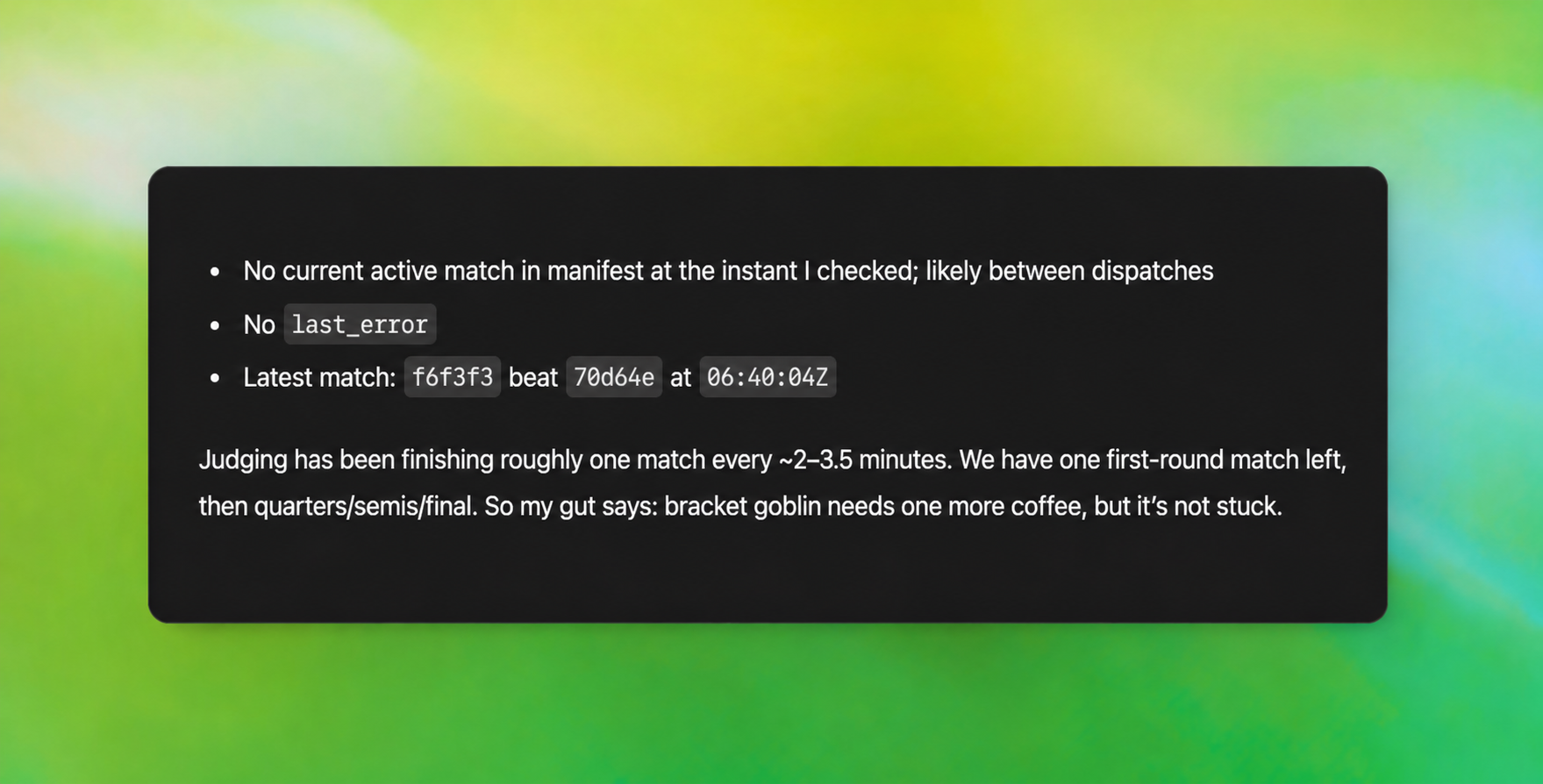
OpenAI Traces ChatGPT’s Goblin Habit to a Stray RL Reward Signal
OpenAI on April 29, 2026 published a post-mortem explaining why its recent ChatGPT models had developed a strange habit of sprinkling goblins, gremlins, and other small creatures into their answers. The cause traces back to reward signals in the “Nerdy” personality during reinforcement learning. Use of “goblin” in ChatGPT rose 175% after the GPT‑5.1 launch, […]
-
OpenAI Launches ChatGPT Images 2.0 with 2K Output and Reasoning Mode
OpenAI on April 21, 2026 unveiled ChatGPT Images 2.0, a new image generation model that pushes outputs to 2K resolution, dramatically improves text rendering inside images, and introduces a “Thinking” mode that reasons about a prompt before drawing. The model is rolling out across ChatGPT, Codex, and the API as gpt-image-2, replacing the GPT-4o-era image […]
-
Introducing GPT‑5: OpenAI’s Most Advanced AI Model Yet
OpenAI has officially launched GPT‑5, marking the most significant upgrade in its AI lineup since GPT‑4. Released on August 7, 2025, GPT‑5 is now available to all users—from free ChatGPT users to developers via API and enterprise clients . Key points OpenAI officially launched GPT-5 on August 7, 2025, marking the most significant upgrade in […]
-
Sam Altman: ChatGPT Therapy Chats Offer No Legal Confidentiality
OpenAI CEO Sam Altman recently issued a stark warning: conversations with ChatGPT, especially those of an emotional, personal, or therapeutic nature, do not receive the same legal confidentiality protections as interactions with human professionals—such as therapists, doctors, or lawyers. This gap means that user chats can legally be accessed and submitted as evidence in court […]
-
AI Wins Gold at 2025 International Mathematical Olympiad
In an unprecedented milestone for artificial intelligence, Google’s Gemini Deep Think and a new experimental OpenAI model both achieved gold medal scores at the 66th International Mathematical Olympiad (IMO), held July 2025 in Queensland, Australia. This marks the first time AI systems have reached this level in the prestigious high-school competition (Reuters). Key points Google’s Gemini Deep Think […]
-
Introducing ChatGPT Agent: From Research to Real‑World Action
OpenAI has launched ChatGPT Agent, a powerful new feature that bridges the gap between research and execution by enabling the AI to interact with the internet—and execute tasks—via its own virtual computer. This marks a major evolution from its previous tools, Operator and Deep Research, by combining and expanding their capabilities into a unified, agentic […]