Tag: Level: Intermediate
-

Google Releases Gemini 3.1 Flash TTS with 200+ Audio Tags
On April 15, 2026, Google DeepMind released Gemini 3.1 Flash TTS — a text-to-speech model that introduces more than 200 granular audio tags for steering vocal style, tone, pacing, and accent, and tops the Artificial Analysis TTS leaderboard with an Elo score of 1,211. The preview is available through the Gemini API, Google AI Studio, […]
-

Anthropic Releases Claude Opus 4.7 With Sharper Coding and 3x Vision Resolution
Anthropic released Claude Opus 4.7 on April 16, 2026 — a direct upgrade to Opus 4.6 that focuses almost entirely on one thing: making the model better at long, hard software engineering work. The new release posts a 13% lift on Anthropic’s internal 93-task coding benchmark, resolves roughly 3x more production-grade tasks on Rakuten-SWE-Bench, and […]
-

Qwen3.6-35B-A3B: Alibaba Open-Sources a Frontier-Class Agentic Coder
On April 2, 2026, Alibaba’s Qwen team open-sourced Qwen3.6-35B-A3B — the first open-weight variant of the Qwen3.6 generation. Released under Apache 2.0 on Hugging Face alongside the proprietary Qwen3.6-Plus API model, the 35-billion-parameter Mixture-of-Experts model activates just 3B parameters per token while posting frontier-level scores on agentic coding and reasoning benchmarks, including 73.4 on SWE-bench […]
-

Anthropic’s 2026 Agentic Coding Trends Report: From Assistants to Agent Teams
Anthropic released its 2026 Agentic Coding Trends Report outlining eight predictions for how AI coding agents will reshape software development this year. The report, subtitled “How coding agents are reshaping software development,” argues that 2026 marks the shift from single AI assistants to coordinated agent teams that can run autonomously for hours or days — […]
-
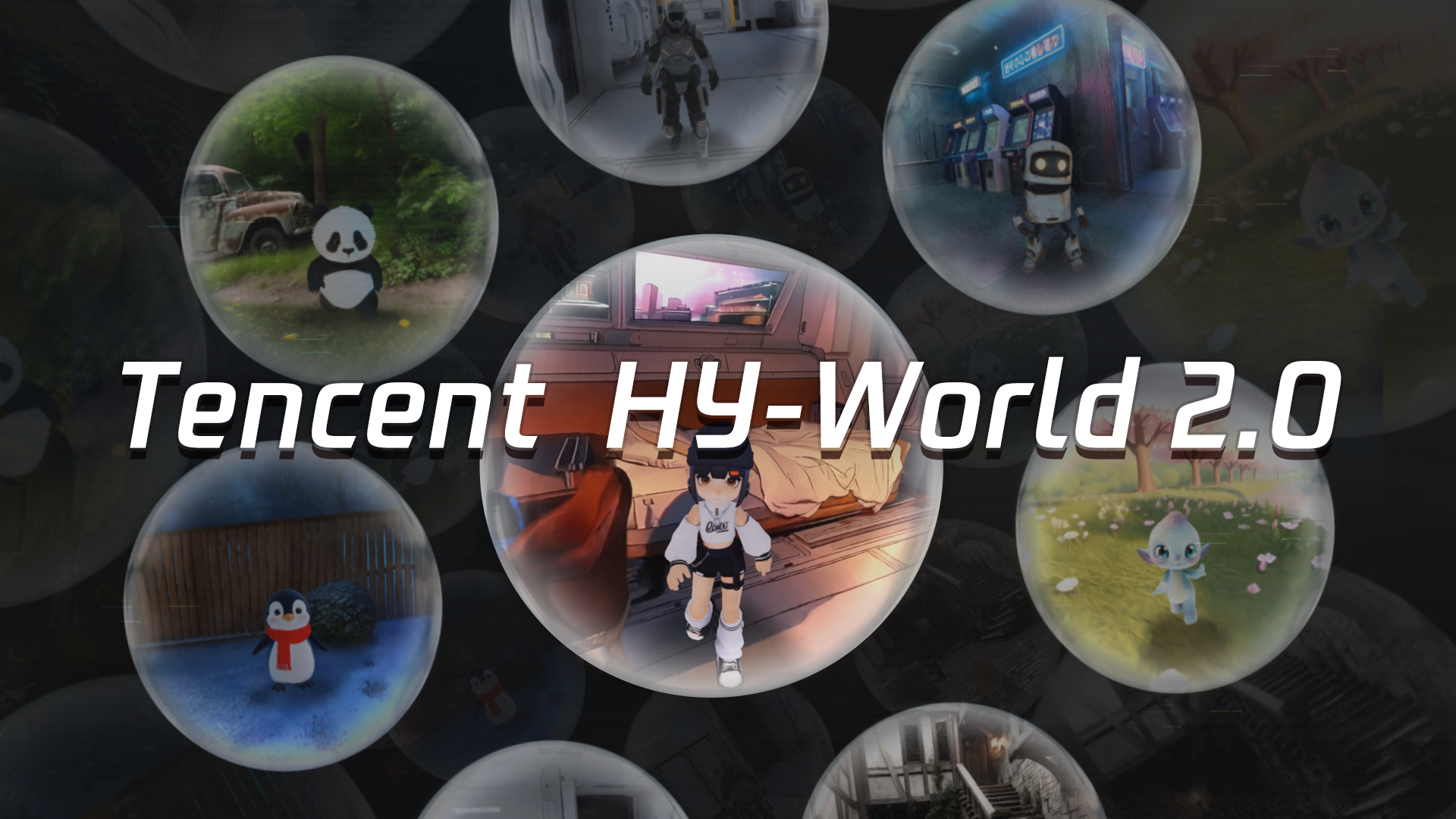
Tencent Open-Sources HY-World 2.0: A Multi-Modal 3D World Model
On April 15, 2026, Tencent open-sourced HY-World 2.0, a multi-modal world model framework that can reconstruct, generate, and simulate 3D worlds from text, images, or video. Unlike video-based world models that produce flat, non-editable pixel sequences, HY-World 2.0 outputs real 3D assets — meshes, Gaussian splattings, and point clouds — that can be directly imported […]
-

Baidu Open-Sources ERNIE-Image, an 8B Diffusion Transformer
Baidu has open-sourced ERNIE-Image, a new text-to-image diffusion model that the company claims reaches state-of-the-art quality among open-weight systems despite using only 8 billion parameters. The model is released under the Apache 2.0 license and is available directly on Hugging Face, along with a distilled “Turbo” variant that generates images in just eight inference steps. […]
-
Anthropic Launches Project Glasswing With Claude Mythos, the Model It Won’t Release
Anthropic announced Project Glasswing on April 7, 2026 — a coordinated effort to deploy its most powerful, unreleased frontier model, Claude Mythos Preview, against the world’s most critical software vulnerabilities. The catch: Anthropic has decided the model is too dangerous to release publicly, and is instead handing controlled access to a coalition of twelve launch […]
-
MiniMax M2.7 Ships as Open Weights: Frontier Agentic Model on Hugging Face
MiniMax M2.7 is now downloadable. The 230B-parameter self-evolving model that MiniMax unveiled in March has shipped as open weights on Hugging Face and ModelScope under a Modified-MIT license, and community quantizations already cover everything from a 60 GB 1-bit build to the full 457 GB BF16 release — putting a frontier-class agentic model in reach […]
-

Hugging Face Elevates Kernels to a First-Class Repo Type
On April 9, 2026, Hugging Face officially elevated Kernels to a first-class repository type on the Hub — joining Models, Datasets, and Spaces as a top-level primitive. The huggingface_hub v1.10.0 release added programmatic support for creating, managing, and downloading kernel repos, cementing an ecosystem that has been quietly growing since mid-2025 into a core part […]
-

MIT Study: AI Chatbots Systematically Underperform for Vulnerable Users
A new study from MIT, presented at AAAI 2026, reveals that leading AI chatbots — including GPT-4, Claude 3 Opus, and Llama 3 — systematically provide less accurate, less truthful, and more condescending responses to users with lower English proficiency, less formal education, or non-U.S. origins. The findings raise urgent questions about who benefits from […]