Tag: open source
-

Microsoft Releases Phi-4-Reasoning-Vision-15B: Small Model, Big Vision
Key points Microsoft released Phi-4-reasoning-vision-15B on March 4, 2026, a compact open-weight multimodal model that combines high-resolution visual perception with selective reasoning. It uses a mid-fusion architecture pairing a SigLIP-2 Naflex vision encoder, which processes up to 3,600 visual tokens at dynamic resolution, with the Phi-4-Reasoning language backbone. About 80% of training data uses <nothink> […]
-
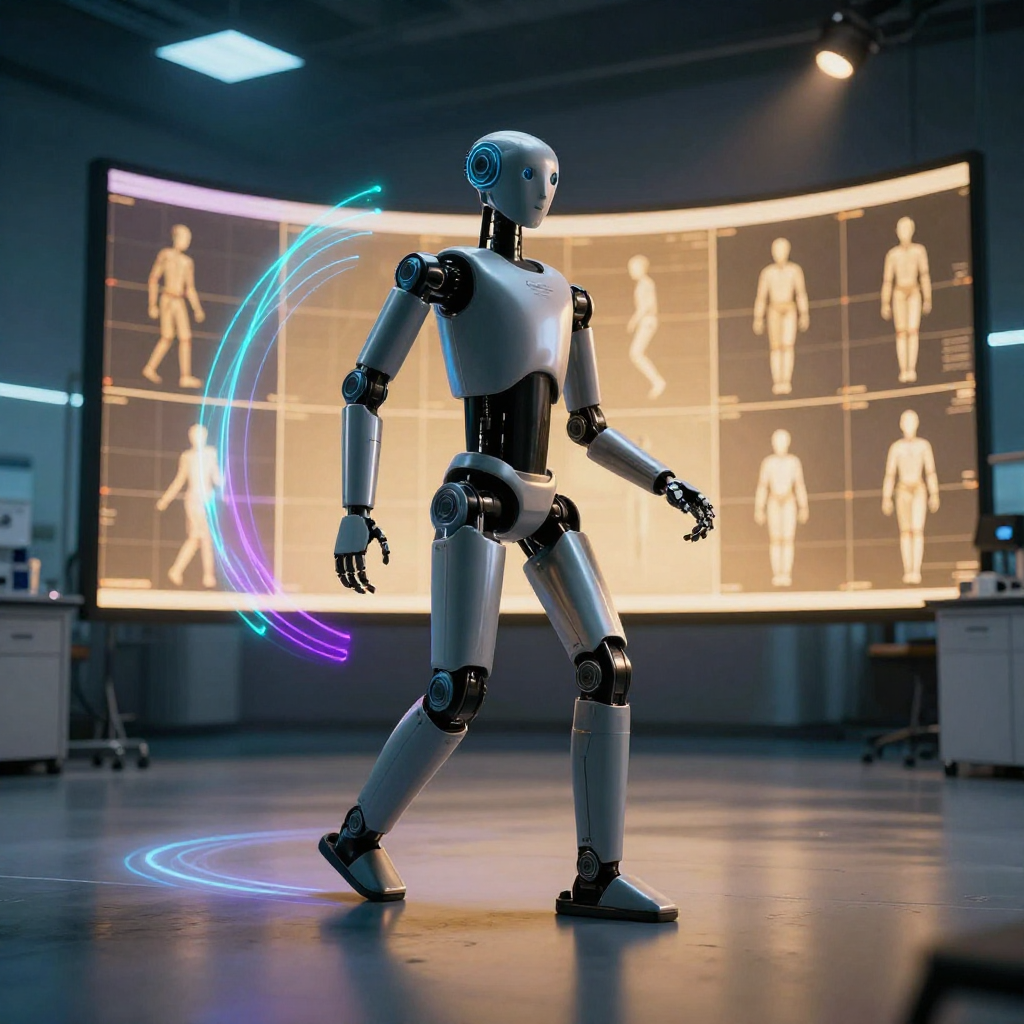
NVIDIA Open-Sources SONIC: A Foundation Model for Humanoid Whole-Body Control
Key points NVIDIA has open-sourced SONIC, a 42-million-parameter humanoid whole-body control foundation model trained on over 100 million frames of motion-capture data, released on February 20, 2026. SONIC scales model capacity from 1.2 million to 42 million parameters, using 100M+ frames of motion capture and 9,000 GPU hours across 128 GPUs over 3 days. Its […]
-
Junyang Lin Steps Down as Qwen Tech Lead in Abrupt Departure
Key points On March 3, 2026, Junyang Lin, the tech lead and public face of Alibaba’s Qwen open-source AI project, announced his departure in a brief post on X reading “me stepping down. bye my beloved qwen.” The exit came just 24 hours after the Qwen team shipped the Qwen 3.5 small model series, and […]
-
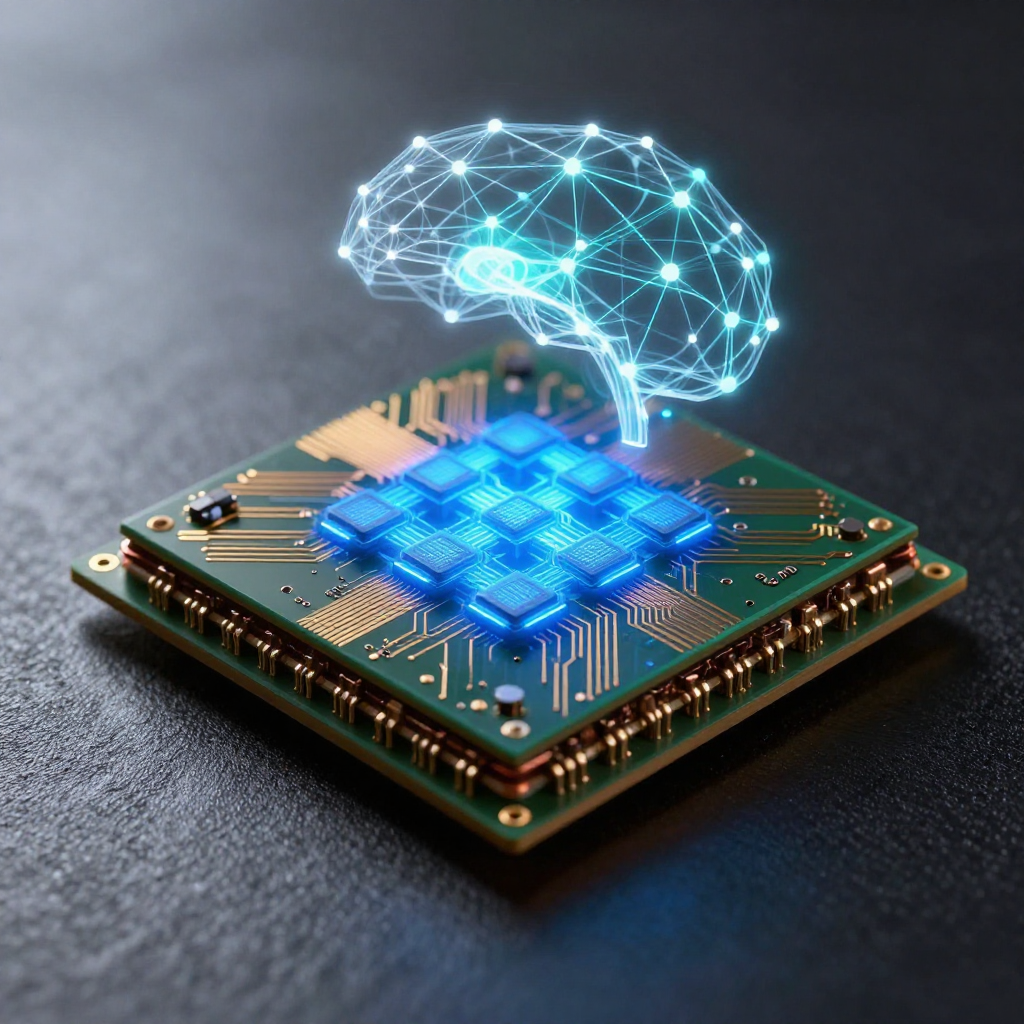
Reverse Engineering Apple’s Neural Engine to Train Transformers on M4
Key points A developer reverse-engineered Apple’s Neural Engine (ANE) on M4 silicon and used it to train a transformer model, which Apple has never officially supported. The open-source project bypasses CoreML and talks directly to the hardware through private APIs, reaching 9.3ms per training step at 1.78 TFLOPS sustained on an M4 Mac Mini running […]
-

Qwen 3.5 Small Models: 9B Parameters That Beat 120B
Key points On March 2, 2026, Alibaba’s Qwen team completed the Qwen 3.5 family with four small dense models of 0.8B, 2B, 4B, and 9B parameters for on-device and edge deployment. All four models are open-weight under Apache 2.0 and available on Hugging Face and ModelScope. Qwen3.5-9B outperforms models 3-13 times its size across language, […]
-

France Opens 74,000 Public Datasets to AI Agents via Official MCP Server
Key points On February 25, 2026, France’s national open data platform data.gouv.fr launched an official Model Context Protocol server, developed by the government digital agency Etalab, giving AI chatbots and agents structured access to over 74,000 public datasets with no API key required. The server acts as a read-only intermediary between AI models and the […]
-

Qwen 3.5 Medium Series: Frontier AI That Fits on Your GPU
Key points On February 24, 2026, Alibaba’s Qwen team expanded the Qwen 3.5 family with three Apache 2.0 open-weight models — Qwen3.5-27B, Qwen3.5-35B-A3B, and Qwen3.5-122B-A10B — available on Hugging Face. Qwen3.5-27B is a dense model with all 27 billion parameters active at inference, optimized for coding and instruction-following, and uses a 3:1 hybrid ratio of […]
-

Qwen 3.5: Alibaba’s Native Multimodal Agent Model Arrives
Key points Alibaba’s Qwen team released Qwen 3.5 on February 16, 2026, with a flagship 397B-parameter mixture-of-experts model built for the agentic AI era. The flagship Qwen3.5-397B-A17B activates only 17 billion parameters per forward pass despite having 397 billion total parameters. Listed specifications include a 256K-token native context window, 1M tokens on the hosted Qwen3.5-Plus, […]
-

Qwen3-Coder-Next: Alibaba’s Ultra-Sparse 80B Coding Agent
Key points Alibaba’s Qwen team released Qwen3-Coder-Next in February 2026 under the Apache 2.0 license, an open-weight coding model that activates only 3 billion of its 80 billion total parameters per forward pass. On SWE-Bench Verified with the SWE-Agent scaffold the model scores 70.6%, and it also scores 62.8% on SWE-Bench Multilingual and 44.3% on […]
-

KittenTTS: State-of-the-Art Voice Synthesis in Under 25 MB
Key points KittenTTS was released on February 19, 2026 by KittenML as an open-source text-to-speech model that fits in under 25 MB. Its smallest configuration uses 14–15 million parameters and runs entirely on CPUs without any GPU requirement. It ships in three variants: Nano at 14–15M parameters and about 25 MB INT8, Micro at 40M […]