Category: AI
-

SupraLabs Ships a 30M-Parameter Any-to-Any Model
SupraLabs has released Supra-A2A-Nano-Exp, an experimental ~30-million-parameter “any-to-any” model that handles text, images, and video in a single autoregressive transformer — small enough to run on a laptop CPU. Released under Apache 2.0 by the independent research group behind a string of trending ultra-small models, it is framed not as a capable generator but as […]
-

Midjourney Unveils FBUCT: A Full-Body Ultrasound Scanner
On June 17, 2026, Midjourney — the company best known for AI image generation — announced its first hardware product and an unexpected new division: Midjourney Medical. The product is a full-body scanner that the company calls FBUCT (Full Body Ultrasonic Computational Tomography), a machine that uses sound and water instead of radiation or magnets […]
-

GLM-5.2: Z.ai’s Open-Weights Coder Beats GPT-5.5 at 1/6 the Cost
On June 13, 2026, Z.ai (formerly Zhipu AI) released GLM-5.2 — a 753-billion-parameter open-weights Mixture-of-Experts model built for long-horizon, autonomous coding. The headline claim is striking: GLM-5.2 edges past OpenAI’s GPT-5.5 on several multi-step engineering benchmarks while costing roughly one-sixth as much to run. The full weights ship under an unrestricted MIT license on Hugging […]
-

Apple Open-Sources Its Foundation Models Framework, Adds Claude and Gemini
At WWDC 2026 on June 9, Apple announced it will open-source its Foundation Models framework — the on-device AI layer that powers Apple Intelligence — later this summer. Alongside the open-source pledge, Apple opened the framework to third-party models like Claude and Gemini, added image input, and made its newest cloud models free to small […]
-

Anthropic Launches Claude Fable 5, Its First Public Mythos-Class Model
Anthropic released Claude Fable 5 on June 9, 2026 — its most capable widely released model and the first time the public can access a “Mythos-class” system that the company had previously kept behind closed doors. Fable 5 posts state-of-the-art results across coding, knowledge work, vision, and scientific research, but ships with a new layer […]
-
Google Ships Gemma 4 QAT Models: 72% Less VRAM, Same Quality
Lead — On June 5, 2026, Google DeepMind released quantization-aware training (QAT) checkpoints for the entire Gemma 4 family, cutting memory requirements by roughly 72% while keeping output quality nearly identical to the full-precision models. The release spans every size — from the sub-1 GB E2B edge model to the 31B dense flagship — and […]
-
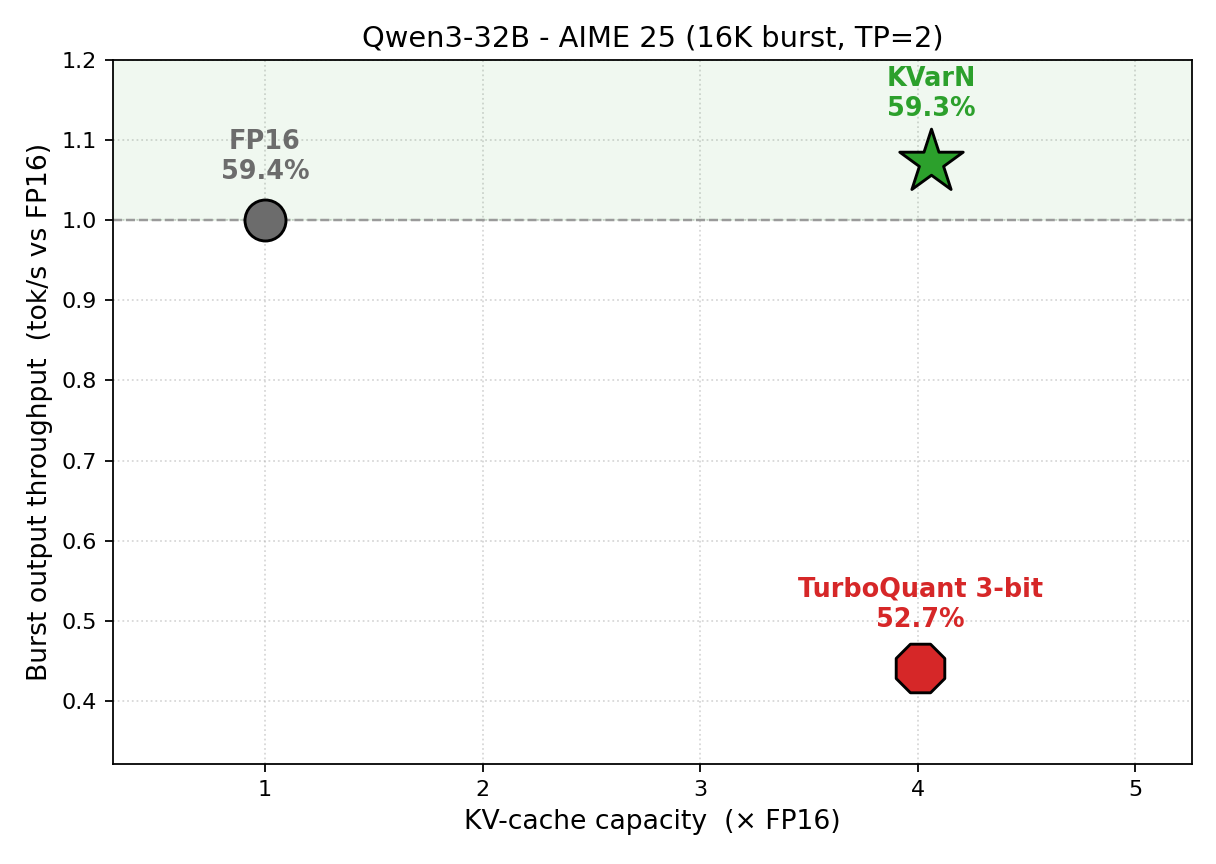
Huawei’s KVarN Hits 5x KV-Cache Capacity at FP16 Accuracy and Throughput
On June 2, 2026, Huawei researchers released KVarN — a variance-normalized KV-cache quantization backend for vLLM that breaks the long-standing tradeoff between cache compression and inference speed. KVarN delivers 3–5× more context capacity at 2-bit precision while keeping FP16-level accuracy and beating FP16 throughput, all behind a single vLLM flag with no calibration. It ships […]
-

Ideogram 4.0: An Open-Weight Design Model That Renders Text
On June 3, 2026, Ideogram released Ideogram 4.0 — its first open-weight text-to-image foundation model. The 9.3-billion-parameter model ships with both weights and inference code under a non-commercial license, and immediately took the top spot among open-weight models on the DesignArena leaderboard. Built from scratch around a single-stream Diffusion Transformer and a structured JSON prompting […]
-

Google Releases Gemma 4 12B: Frontier Multimodal AI on a Laptop
Lead — On June 3, 2026, Google DeepMind released Gemma 4 12B, a unified, encoder-free multimodal model that brings frontier-class intelligence to a single 16 GB laptop. The 11.95-billion-parameter model handles text, images, and audio in one decoder-only transformer, supports a 256K-token context across 140+ languages, and ships under a fully permissive Apache 2.0 license. Google […]
-
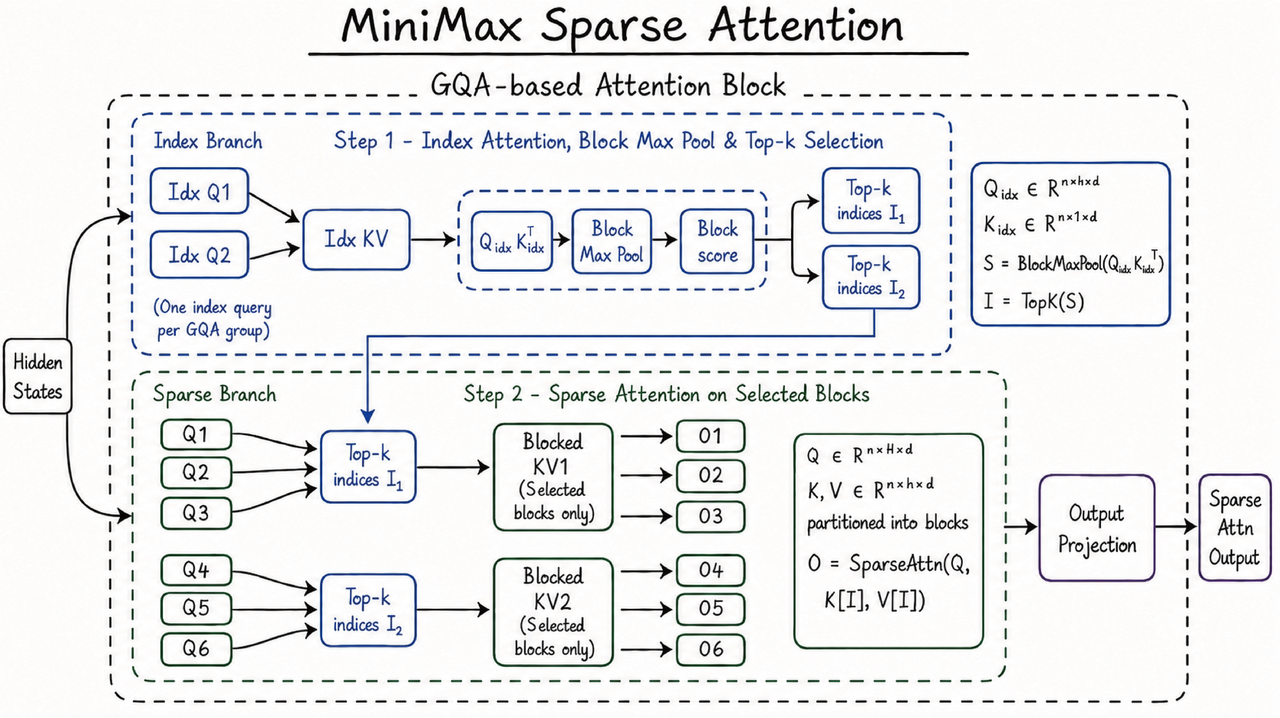
MiniMax M3: Frontier Coding, 1M Context, and Sparse Attention
MiniMax released M3 on June 1, 2026, claiming the first open-weight model to combine frontier coding, a 1-million-token context window, and native multimodality in a single architecture. The headline is not just the benchmark sheet — it is the engine underneath: a new sparse-attention mechanism (MSA) that the company says cuts per-token compute at 1M […]