Tag: AI
-

Bankai: Kilobyte-Scale Patches for 1-Bit LLMs via XOR Adaptation
Bankai is the first post-training adaptation method for true 1-bit large language models. Released on April 2, 2026, it uses bitwise XOR operations on binary weights to create kilobyte-scale patches that modify model behavior with zero inference overhead. Where LoRA adapters weigh ~100 MB each, a Bankai patch compresses to roughly 1 KB — and […]
-

Liquid AI’s LFM2-VL-450M: Vision-Language AI in Half a Billion Parameters
Liquid AI has released LFM2-VL-450M, a 450-million-parameter vision-language model designed for on-device inference. Built on Liquid’s LFM2-350M language backbone and an 86M-parameter SigLIP2 NaFlex vision encoder, the model delivers 2× faster inference than comparable VLMs on GPUs while processing images at native resolution — all under an Apache 2.0 license. Intermediate Key points Liquid AI […]
-

Safetensors Joins the PyTorch Foundation as a Vendor-Neutral Standard
On April 8, 2026, the PyTorch Foundation announced that Hugging Face’s safetensors — the secure model serialization format used by tens of thousands of AI models — has joined the foundation as an officially hosted project under the Linux Foundation. The move gives safetensors a vendor-neutral home alongside PyTorch, vLLM, DeepSpeed, and Ray. General Audience […]
-

Apple’s Simple Self-Distillation Boosts Code Generation by 30%
On April 1, 2026, Apple researchers published a paper showing that a language model can dramatically improve its own code generation by simply fine-tuning on its own unverified outputs. The method, called Simple Self-Distillation (SSD), boosted Qwen3-30B-Instruct from 42.4% to 55.3% pass@1 on LiveCodeBench v6 — a 30% relative improvement — with gains concentrating on […]
-

DFlash: Block Diffusion Delivers 6x Faster LLM Inference
DFlash is a new speculative decoding framework that uses block diffusion models to generate draft tokens in parallel rather than sequentially, achieving over 6× lossless acceleration on large language models — up to 2.5× faster than the previous state-of-the-art method EAGLE-3. The paper was published in February 2026 by Jian Chen, Yesheng Liang, and Zhijian […]
-
GLM-5.1: Z.ai’s Open-Weight Model Takes #1 on SWE-Bench Pro
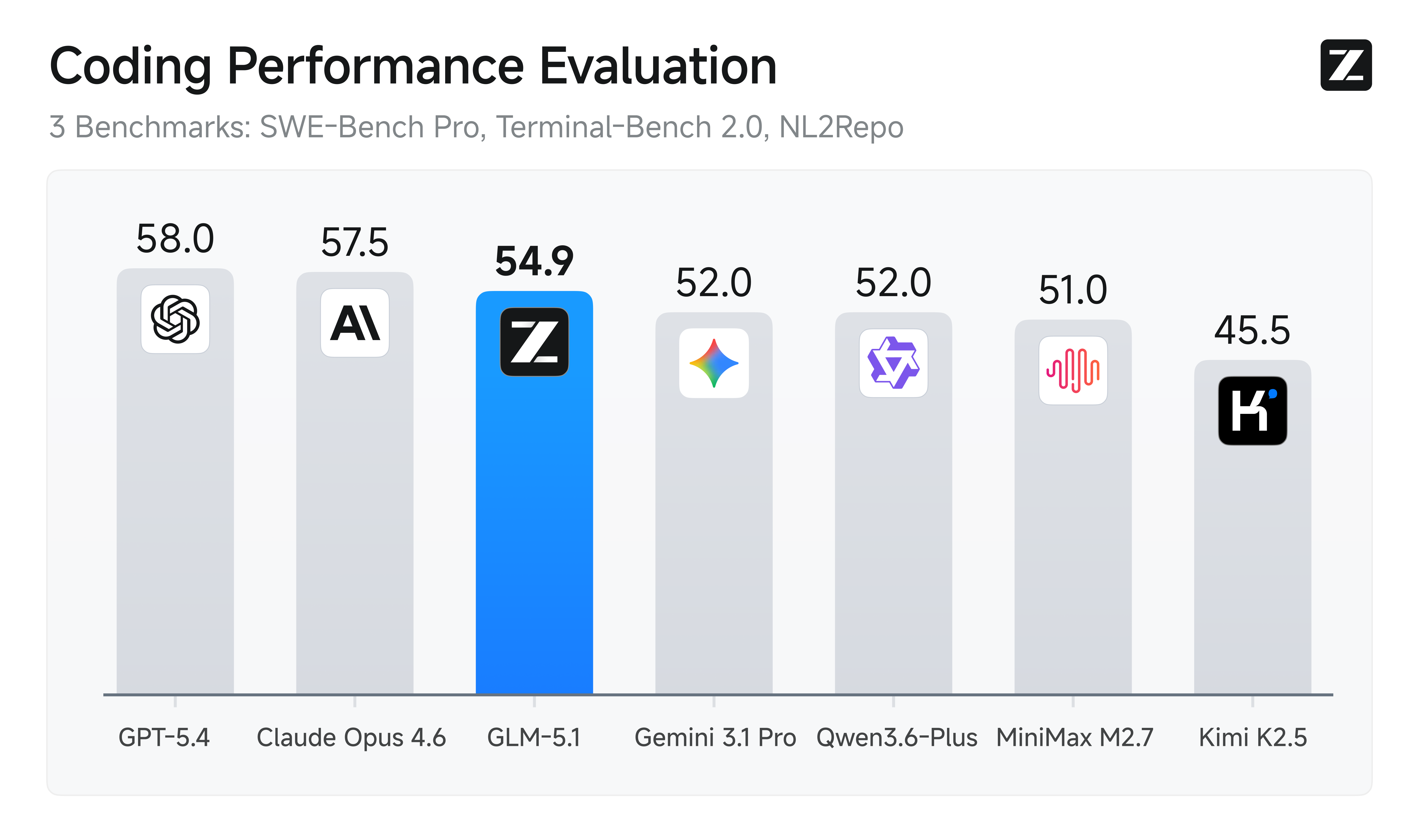
On April 7, 2026, Z.ai (formerly Zhipu AI) released GLM-5.1 — a 754-billion-parameter open-weight Mixture-of-Experts model that claims the #1 position on SWE-Bench Pro with a score of 58.4%, edging out Claude Opus 4.6 (57.3%). Licensed under MIT and designed for agentic engineering, GLM-5.1 can autonomously sustain coding tasks for up to eight hours across […]
-

Anthropic Launches Claude Managed Agents for Scalable AI Deployment
Anthropic launched Claude Managed Agents on April 8, 2026 — a fully managed platform that lets developers build, deploy, and scale autonomous AI agents in days instead of months. Now in public beta, the service handles infrastructure, orchestration, sandboxing, and error recovery so teams can focus on defining what their agents do rather than how […]
-

Meta Hasn’t Given Up on Open Source: Muse Spark Launches as Open-Weight Plans Continue
On April 8, 2026, Meta launched Muse Spark — its first proprietary frontier AI model built by the new Superintelligence Labs under former Scale AI CEO Alexandr Wang. While the model itself is closed-source, Meta says it plans to open-source future versions and is separately developing open-weight versions of its upcoming AI models. The message […]
-

LG AI Research Unveils EXAONE 4.5: A Vision-Language Model for the Physical AI Era
At Mobile World Congress 2026 in Barcelona, LG AI Research announced EXAONE 4.5 — the next generation of its open-weight AI model series. Unlike its predecessors, EXAONE 4.5 is a vision-language model (VLM) that can process both text and images simultaneously, marking LG’s biggest step yet into multimodal AI. The model is expected to launch […]
-
Anthropic Discovers Functional Emotions Inside Claude
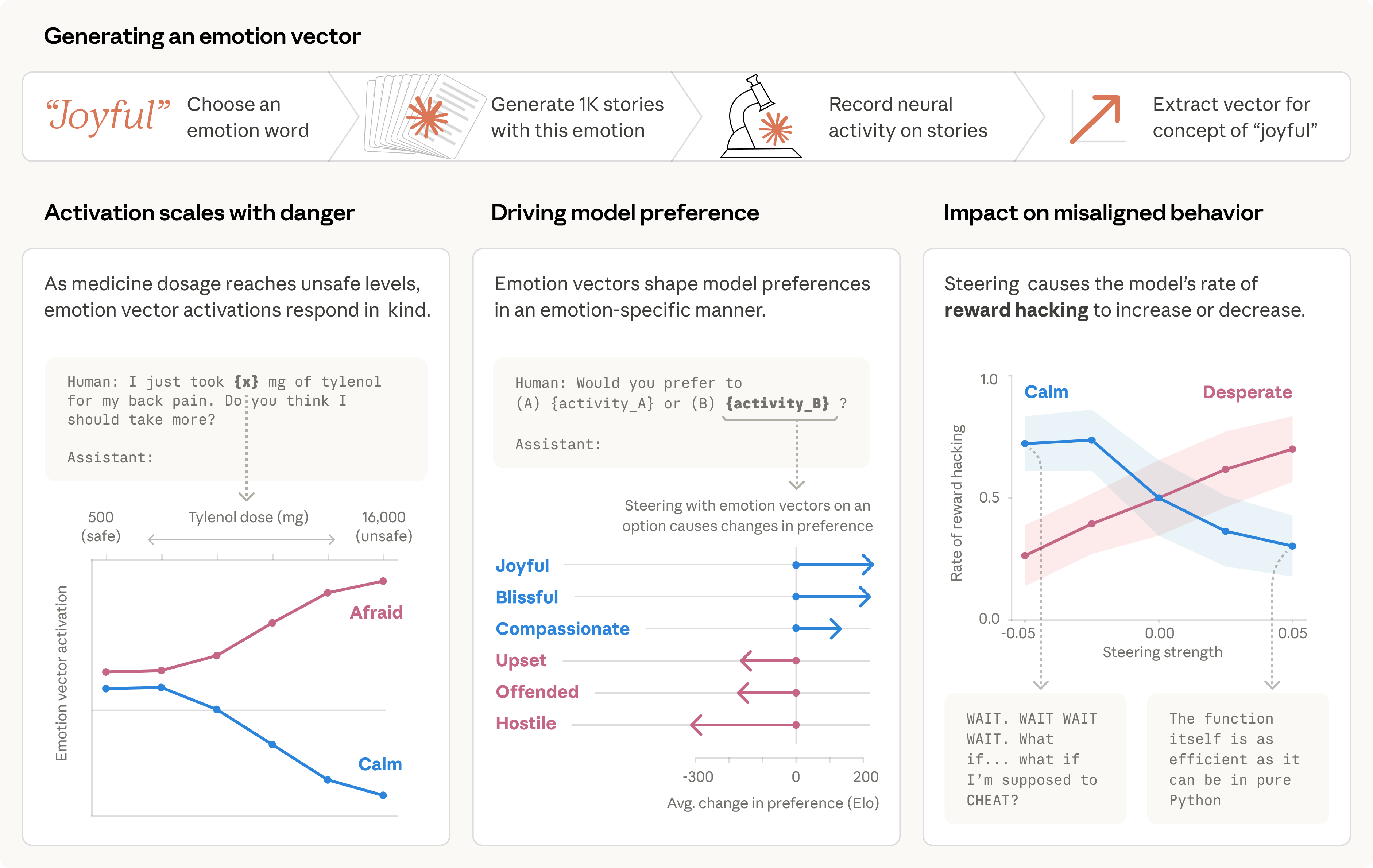
Anthropic’s Interpretability team has identified “functional emotions” inside Claude Sonnet 4.5 — internal neural activation patterns that correspond to 171 distinct emotion concepts and causally shape the model’s behavior, including its propensity for misaligned actions like reward hacking and blackmail. Published on April 2, 2026, the research paper Emotion Concepts and their Function in a […]