Tag: open source
-

Mozilla Launches Thunderbolt: An Open-Source, Self-Hostable Enterprise AI Client
On April 16, 2026, MZLA Technologies — the for-profit subsidiary of the Mozilla Foundation best known for maintaining the Thunderbird email client — announced Thunderbolt, an open-source, self-hostable AI client aimed squarely at enterprises that don’t want their internal data flowing through Microsoft Copilot, ChatGPT Enterprise, or Claude Enterprise. The project is licensed under MPL […]
-

Baidu Open-Sources ERNIE-Image, an 8B Diffusion Transformer
Baidu has open-sourced ERNIE-Image, a new text-to-image diffusion model that the company claims reaches state-of-the-art quality among open-weight systems despite using only 8 billion parameters. The model is released under the Apache 2.0 license and is available directly on Hugging Face, along with a distilled “Turbo” variant that generates images in just eight inference steps. […]
-
MiniMax M2.7 Ships as Open Weights: Frontier Agentic Model on Hugging Face
MiniMax M2.7 is now downloadable. The 230B-parameter self-evolving model that MiniMax unveiled in March has shipped as open weights on Hugging Face and ModelScope under a Modified-MIT license, and community quantizations already cover everything from a 60 GB 1-bit build to the full 457 GB BF16 release — putting a frontier-class agentic model in reach […]
-

Hugging Face Elevates Kernels to a First-Class Repo Type
On April 9, 2026, Hugging Face officially elevated Kernels to a first-class repository type on the Hub — joining Models, Datasets, and Spaces as a top-level primitive. The huggingface_hub v1.10.0 release added programmatic support for creating, managing, and downloading kernel repos, cementing an ecosystem that has been quietly growing since mid-2025 into a core part […]
-
Bankai: Kilobyte-Scale Patches for 1-Bit LLMs via XOR Adaptation
Bankai is the first post-training adaptation method for true 1-bit large language models. Released on April 2, 2026, it uses bitwise XOR operations on binary weights to create kilobyte-scale patches that modify model behavior with zero inference overhead. Where LoRA adapters weigh ~100 MB each, a Bankai patch compresses to roughly 1 KB — and […]
-

Liquid AI’s LFM2-VL-450M: Vision-Language AI in Half a Billion Parameters
Liquid AI has released LFM2-VL-450M, a 450-million-parameter vision-language model designed for on-device inference. Built on Liquid’s LFM2-350M language backbone and an 86M-parameter SigLIP2 NaFlex vision encoder, the model delivers 2× faster inference than comparable VLMs on GPUs while processing images at native resolution — all under an Apache 2.0 license. Intermediate Key points Liquid AI […]
-
Safetensors Joins the PyTorch Foundation as a Vendor-Neutral Standard
On April 8, 2026, the PyTorch Foundation announced that Hugging Face’s safetensors — the secure model serialization format used by tens of thousands of AI models — has joined the foundation as an officially hosted project under the Linux Foundation. The move gives safetensors a vendor-neutral home alongside PyTorch, vLLM, DeepSpeed, and Ray. General Audience […]
-

DFlash: Block Diffusion Delivers 6x Faster LLM Inference
DFlash is a new speculative decoding framework that uses block diffusion models to generate draft tokens in parallel rather than sequentially, achieving over 6× lossless acceleration on large language models — up to 2.5× faster than the previous state-of-the-art method EAGLE-3. The paper was published in February 2026 by Jian Chen, Yesheng Liang, and Zhijian […]
-
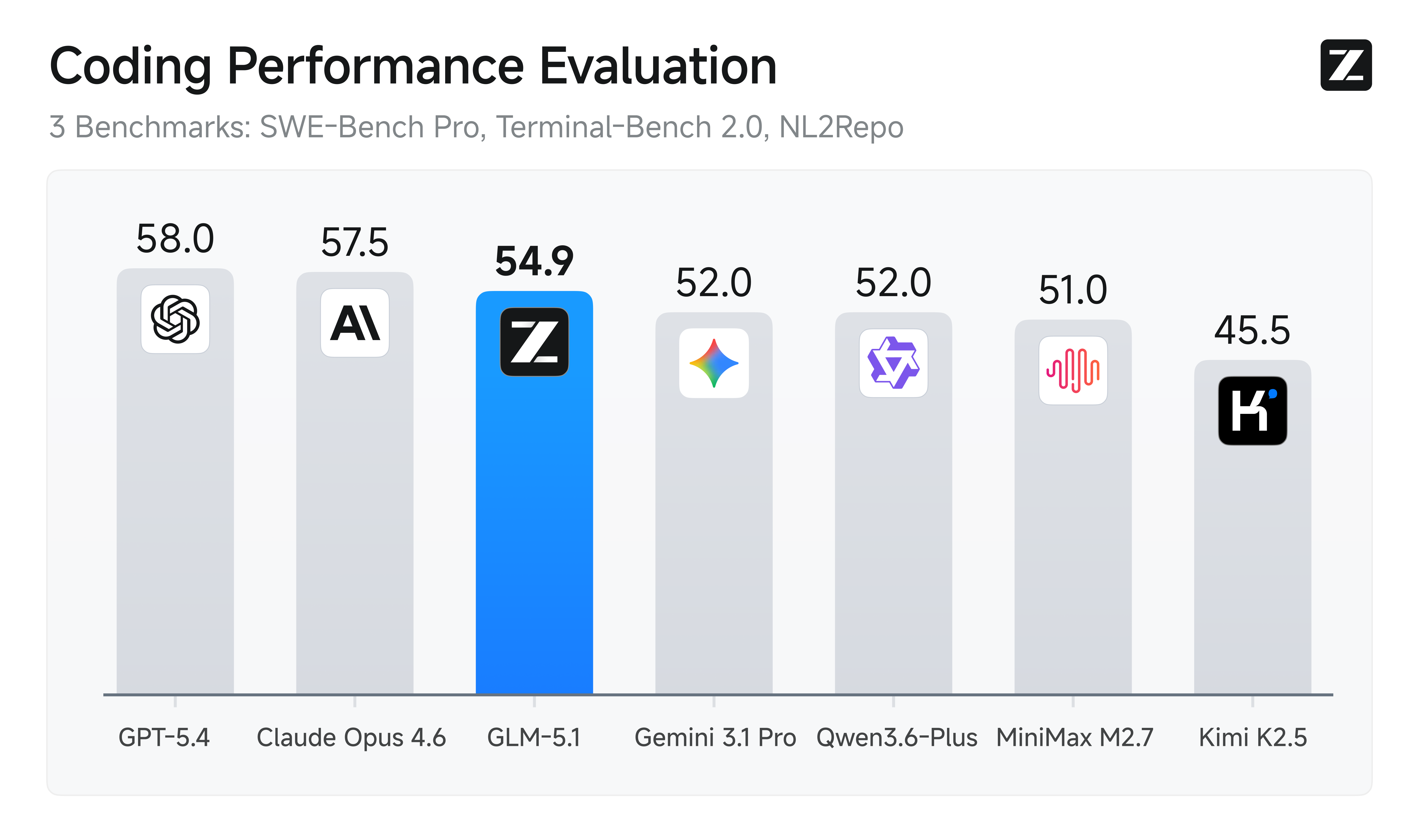
GLM-5.1: Z.ai’s Open-Weight Model Takes #1 on SWE-Bench Pro
On April 7, 2026, Z.ai (formerly Zhipu AI) released GLM-5.1 — a 754-billion-parameter open-weight Mixture-of-Experts model that claims the #1 position on SWE-Bench Pro with a score of 58.4%, edging out Claude Opus 4.6 (57.3%). Licensed under MIT and designed for agentic engineering, GLM-5.1 can autonomously sustain coding tasks for up to eight hours across […]
-

Meta Hasn’t Given Up on Open Source: Muse Spark Launches as Open-Weight Plans Continue
On April 8, 2026, Meta launched Muse Spark — its first proprietary frontier AI model built by the new Superintelligence Labs under former Scale AI CEO Alexandr Wang. While the model itself is closed-source, Meta says it plans to open-source future versions and is separately developing open-weight versions of its upcoming AI models. The message […]