Tag: llm
-
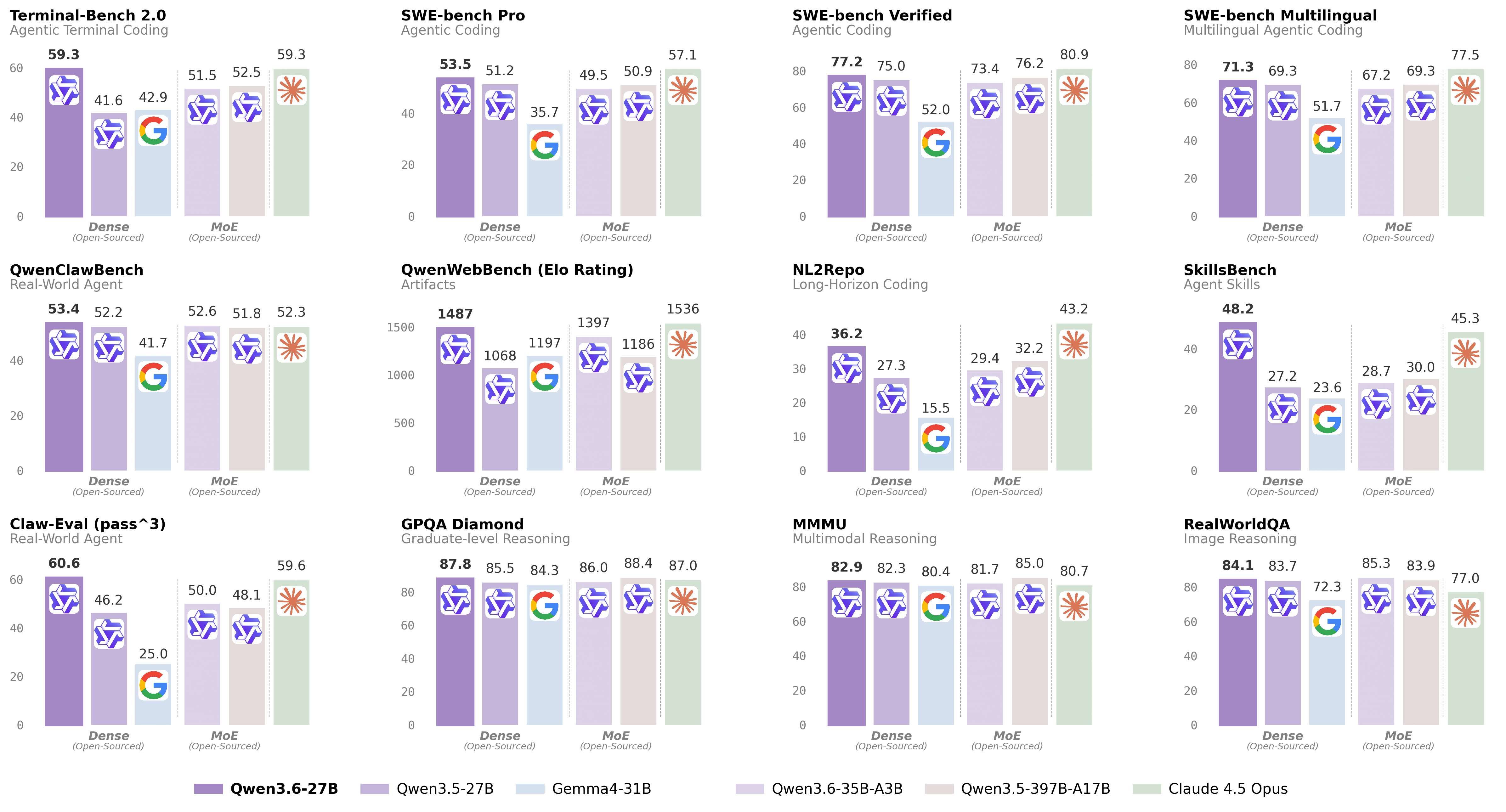
Qwen3.6-27B: A Dense 27B Model That Beats a 397B MoE on Coding
On April 22, 2026, Alibaba’s Qwen team released Qwen3.6-27B — the first dense open-weight model in the Qwen3.6 generation. Released under Apache 2.0 on Hugging Face, the 27-billion-parameter multimodal model posts flagship-level agentic coding scores that beat the team’s previous-generation 397B Mixture-of-Experts flagship across multiple benchmarks, while fitting into a 16.8 GB Q4_K_M quantization that runs […]
-

LLMs Think in Geometry, Not Language, New Study Argues
A new study from independent researcher David Noel Ng argues that large language models do most of their reasoning outside of language entirely. In “LLM Neuroanatomy III: Do LLMs Break the Sapir-Whorf Hypothesis?” — published in late March 2026 — Ng shows that across five architecturally distinct frontier models from five different labs, the middle […]
-

Anthropic Releases Claude Opus 4.7 With Sharper Coding and 3x Vision Resolution
Anthropic released Claude Opus 4.7 on April 16, 2026 — a direct upgrade to Opus 4.6 that focuses almost entirely on one thing: making the model better at long, hard software engineering work. The new release posts a 13% lift on Anthropic’s internal 93-task coding benchmark, resolves roughly 3x more production-grade tasks on Rakuten-SWE-Bench, and […]
-
Qwen3.6-35B-A3B: Alibaba Open-Sources a Frontier-Class Agentic Coder
On April 2, 2026, Alibaba’s Qwen team open-sourced Qwen3.6-35B-A3B — the first open-weight variant of the Qwen3.6 generation. Released under Apache 2.0 on Hugging Face alongside the proprietary Qwen3.6-Plus API model, the 35-billion-parameter Mixture-of-Experts model activates just 3B parameters per token while posting frontier-level scores on agentic coding and reasoning benchmarks, including 73.4 on SWE-bench […]
-
MiniMax M2.7 Ships as Open Weights: Frontier Agentic Model on Hugging Face
MiniMax M2.7 is now downloadable. The 230B-parameter self-evolving model that MiniMax unveiled in March has shipped as open weights on Hugging Face and ModelScope under a Modified-MIT license, and community quantizations already cover everything from a 60 GB 1-bit build to the full 457 GB BF16 release — putting a frontier-class agentic model in reach […]
-

MIT Study: AI Chatbots Systematically Underperform for Vulnerable Users
A new study from MIT, presented at AAAI 2026, reveals that leading AI chatbots — including GPT-4, Claude 3 Opus, and Llama 3 — systematically provide less accurate, less truthful, and more condescending responses to users with lower English proficiency, less formal education, or non-U.S. origins. The findings raise urgent questions about who benefits from […]
-

Bankai: Kilobyte-Scale Patches for 1-Bit LLMs via XOR Adaptation
Bankai is the first post-training adaptation method for true 1-bit large language models. Released on April 2, 2026, it uses bitwise XOR operations on binary weights to create kilobyte-scale patches that modify model behavior with zero inference overhead. Where LoRA adapters weigh ~100 MB each, a Bankai patch compresses to roughly 1 KB — and […]
-

Apple’s Simple Self-Distillation Boosts Code Generation by 30%
On April 1, 2026, Apple researchers published a paper showing that a language model can dramatically improve its own code generation by simply fine-tuning on its own unverified outputs. The method, called Simple Self-Distillation (SSD), boosted Qwen3-30B-Instruct from 42.4% to 55.3% pass@1 on LiveCodeBench v6 — a 30% relative improvement — with gains concentrating on […]
-

DFlash: Block Diffusion Delivers 6x Faster LLM Inference
DFlash is a new speculative decoding framework that uses block diffusion models to generate draft tokens in parallel rather than sequentially, achieving over 6× lossless acceleration on large language models — up to 2.5× faster than the previous state-of-the-art method EAGLE-3. The paper was published in February 2026 by Jian Chen, Yesheng Liang, and Zhijian […]
-
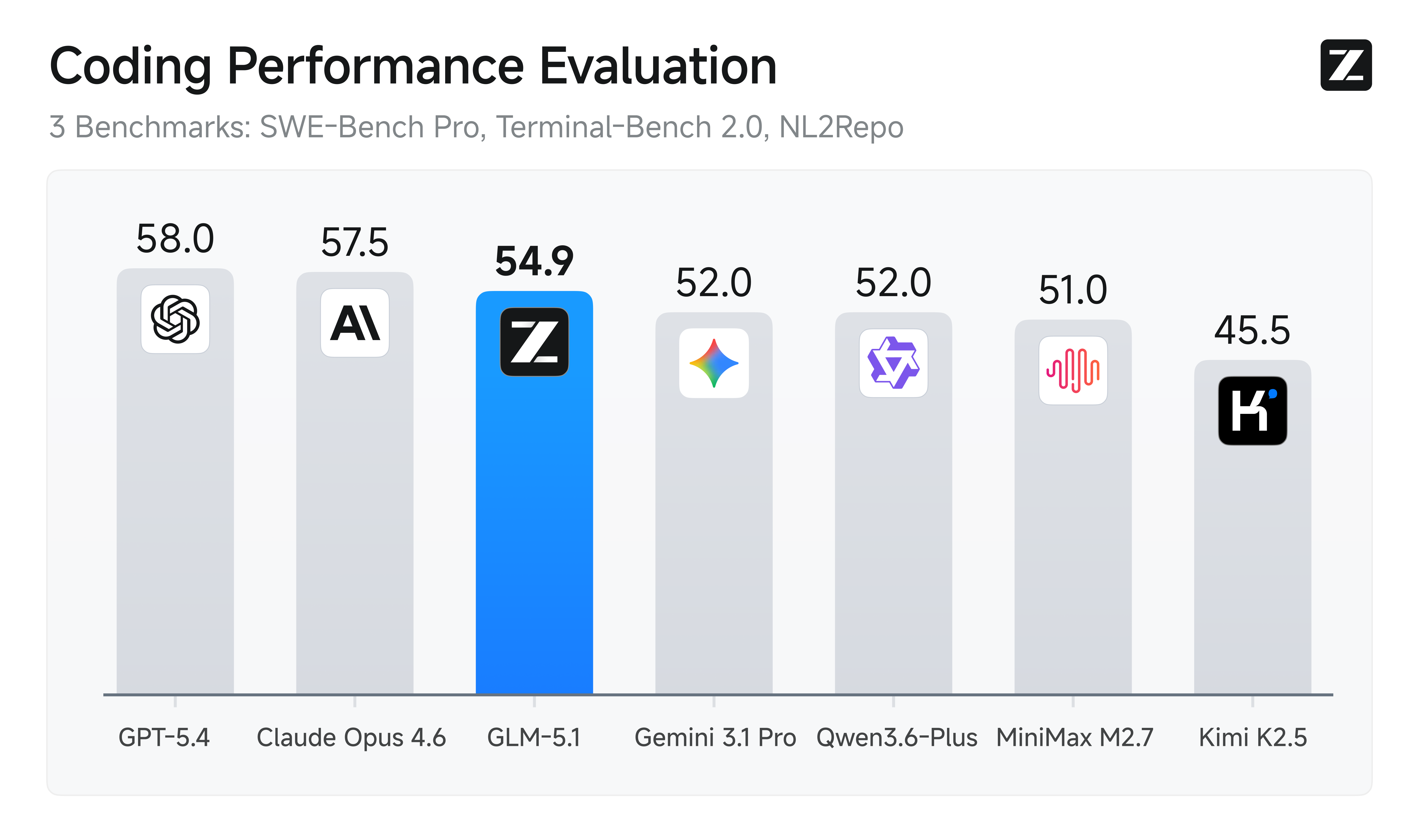
GLM-5.1: Z.ai’s Open-Weight Model Takes #1 on SWE-Bench Pro
On April 7, 2026, Z.ai (formerly Zhipu AI) released GLM-5.1 — a 754-billion-parameter open-weight Mixture-of-Experts model that claims the #1 position on SWE-Bench Pro with a score of 58.4%, edging out Claude Opus 4.6 (57.3%). Licensed under MIT and designed for agentic engineering, GLM-5.1 can autonomously sustain coding tasks for up to eight hours across […]